Harare, Zimbabwe | As climate change intensifies across Africa, conversations about energy access, adaptation, resilience, and environmental justice often take place in conference halls, policy forums, and international summits.
Yet in Harare, Zimbabwe, a different kind of climate gathering is taking shape—one that places women’s lived experiences, healing, creativity, and collective action at the centre of the climate justice movement.
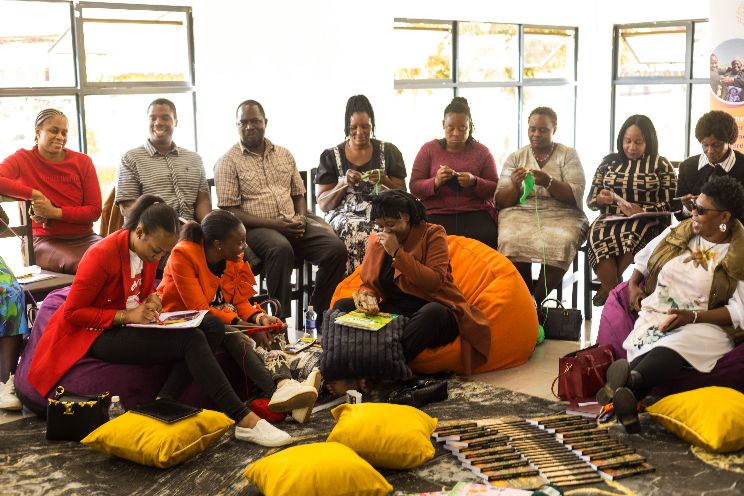
On 1–2 June 2026, approximately 30 women leaders, grassroots activists, artists, community organisers, and climate justice advocates gathered for an intimate Eco-Feminist Circle and Collective Gathering.
Organised by Shine Collab and regional partners, the event sought to challenge conventional approaches to climate action by creating a safe and nurturing space where participants could reflect on the intersections of gender, power, ecology, and social justice.
Far from the formal atmosphere of traditional conferences, the venue was transformed into a creative sanctuary.
Cushions, bean bags, candles, colorful thread installations, knitting materials, crayons, and community art tools invited participants into an environment designed for openness and connection.
The setting reflected the gathering’s central philosophy: that meaningful climate solutions emerge not only from policy debates but also from relationships, shared experiences, and collective healing.
At the heart of the discussions was a critical examination of the challenges women continue to face in leadership and decision-making spaces. Participants explored how systemic structures often compel women leaders to conform to existing norms rather than transform them.
Dr Mela Chiponda, Executive Director, Shine Collab, a global feminist network that accelerates gender-just solutions at the intersection of climate resilience, community power, and energy access noted that even where women achieve representation in leadership, underlying systems frequently remain unchanged.
The challenge, she argued, is not merely increasing the number of women in positions of authority but dismantling the ideas, practices, and power structures that limit genuine transformation.
This theme resonated strongly throughout the gathering. Participants reflected on how gender parity alone cannot address deeper ideological barriers that continue to shape institutions and communities.
Instead, sustained efforts are needed to confront the cultural and social norms that influence whose voices are heard and whose experiences are valued.
The conversation soon expanded to another pressing issue affecting women across the continent: clean energy access, gender-based violence.
According to Dr Mela, Africa’s energy deficit is one of the most well-documented development failures of our time. But behind the aggregate numbers is a deeply gendered story that remains largely invisible in the boardrooms, financing structures and policy agreements where decisions are made.
Nearly 600 million people – almost half of Africa’s population – still do not have reliable access to electricity. Sub-Saharan Africa is home to 77% of the world’s energy-poor population, a share that grew during the COVID-19 pandemic as electrification efforts lost momentum.
Read more here.